Festive Herb Roast Turkey
Highlighted under: Dinner Party Recipes
I can't think of a more comforting and celebratory dish than a beautifully roasted turkey, especially when infused with fragrant herbs. Creating a festive herb roast turkey is a tradition I cherish, bringing friends and family together around the table. The aroma of rosemary, thyme, and sage fills the kitchen as it cooks, making it impossible to resist. With a little bit of patience and love, this turkey turns out juicy and flavorful, making any gathering feel like a special occasion.
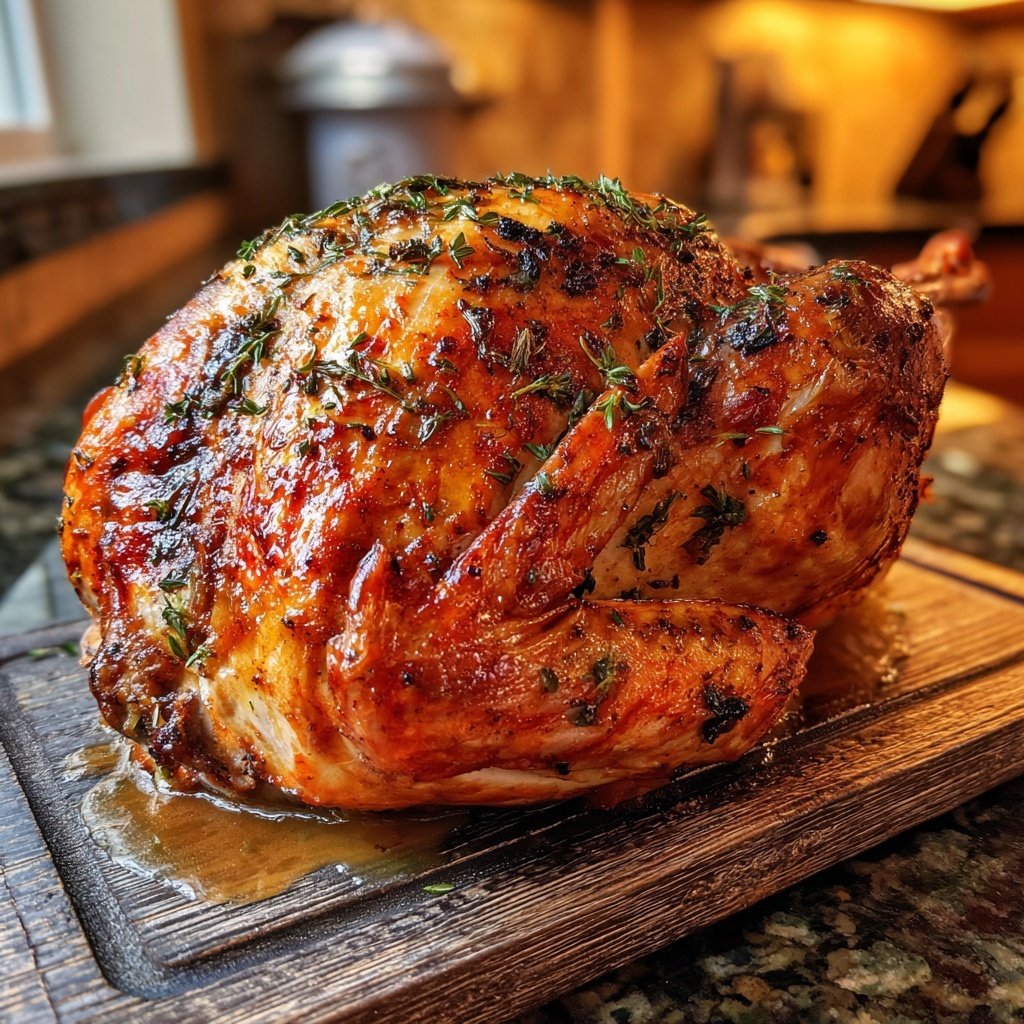
When I first attempted a herb roast turkey, I was nervous about overcooking it. However, through trial and error, I discovered that letting the turkey rest is just as crucial as the roasting itself. This step allows the juices to redistribute, resulting in the most succulent meat. I always aim for a golden, crispy skin, and basting the turkey every thirty minutes does the trick beautifully!
Using a mixture of fresh herbs versus dried ones transforms the dish, imparting a vibrant flavor profile that elevates the turkey from ordinary to extraordinary. Nothing beats the satisfaction of carving into a perfectly cooked bird, surrounded by loved ones enjoying the fruits of your labor.
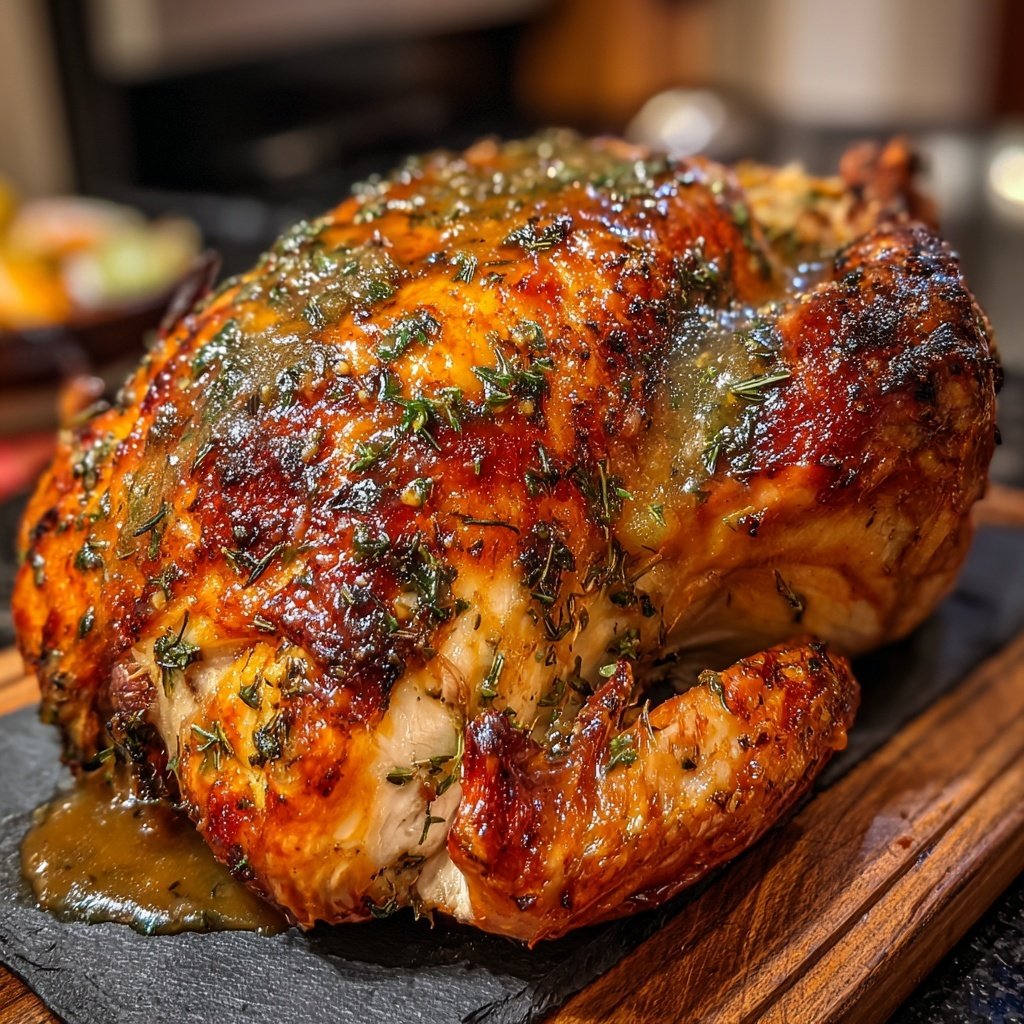
Why You Will Love This Recipe
- Aromatic blend of fresh herbs that enhances flavor
- Juicy and tender meat with a crispy, golden skin
- Perfect for holiday gatherings and special occasions
Choosing the Perfect Turkey
Selecting the right turkey is essential for a successful roast. A whole turkey weighing between 12-14 pounds is ideal for feeding 8-10 people. When choosing, look for a fresh turkey if possible, as it tends to be juicier and more flavorful than frozen. If you opt for a frozen turkey, ensure you allow ample time for thawing—approximately 24 hours in the refrigerator for every 4-5 pounds. This careful selection sets the stage for a delicious feast.
Another consideration is whether to buy a farm-raised or conventionally raised turkey. Farm-raised turkeys are often more flavorful due to their diet and lifestyle. Additionally, organic options can provide peace of mind regarding animal welfare. I recommend checking the label for terms like 'natural' or 'free-range'—these attributes usually translate to better taste and texture.
Herb Importance in Flavor Development
The trio of rosemary, thyme, and sage not only infuses the turkey with aromatic flavors but also balances the richness of the meat. Fresh herbs are ideal, as they offer more robust flavors compared to dried. When you chop the herbs, try to avoid excessive bruising; this can reduce their essential oils which contribute to the overall flavor. I usually use a sharp knife for precise cuts to keep the freshness intact.
If you're missing any of these herbs, feel free to substitute with others like oregano or parsley. Just keep in mind that strong herbs may overpower the turkey’s natural flavor. If you prefer a milder herb blend, consider experimenting with herbs de Provence, which contains a mixture of several herbs and can complement the turkey beautifully.
Basting for Optimal Juiciness
Basting the turkey every 30 minutes is a crucial step that helps keep the meat moist and enhances the skin's golden crispness. As the turkey roasts, the butter and juices create a rich baste that you can spoon over the meat, promoting even cooking and adding layers of flavor. If you notice that the skin is browning too quickly, you can tent the turkey loosely with aluminum foil to shield it while the meat continues to cook.
An alternative to basting is to use an injection marinade. This involves using a syringe to inject seasoned broth into the thicker parts of the turkey, ensuring juiciness throughout. This technique can complement the herbs you use and cuts down on the need for frequent basting. Just be sure to inject a few hours before roasting to give the flavors time to penetrate.
Ingredients
For the Turkey
- 1 whole turkey (12-14 pounds)
- 1/2 cup unsalted butter, softened
- 1 tablespoon salt
- 1 tablespoon black pepper
- 1 tablespoon garlic powder
- 2 tablespoons fresh rosemary, chopped
- 2 tablespoons fresh thyme, chopped
- 2 tablespoons fresh sage, chopped
- 1 onion, quartered
- 2 cups low-sodium chicken broth
Instructions for preparation
Cooking Steps
Preheat the Oven
Preheat your oven to 325°F (165°C).
Prepare the Turkey
Remove the giblets from the turkey and pat it dry with paper towels. Rub the softened butter all over the turkey, including under the skin. Season with salt, pepper, and garlic powder.
Add Herbs
Sprinkle the fresh rosemary, thyme, and sage under the skin and inside the cavity. Place the quartered onion inside the turkey for extra flavor.
Roast the Turkey
Place the turkey breast side up in a roasting pan and pour the chicken broth into the bottom of the pan. Roast for about 13-15 minutes per pound, basting every 30 minutes.
Check Doneness
The turkey is done when the internal temperature reaches 165°F (75°C) in the thickest part of the thigh. Cover with foil if it browns too quickly.
Let It Rest
Remove the turkey from the oven and let it rest for at least 30 minutes before carving. This ensures juicy meat.
Serving Suggestions
Pro Tips
- Make sure to use a meat thermometer to check for doneness. This method allows for precise cooking and prevents dry turkey.
Resting for Perfect Slices
After removing the turkey from the oven, letting it rest for at least 30 minutes is vital. This resting period allows the juices to redistribute throughout the meat, ensuring that every slice is tender and moist. If you carve too soon, much of the juices will run out, leading to dry slices. I often cover the turkey loosely with foil to keep it warm while it rests without steaming the skin.
During the resting phase, you can prepare your sides or gravy. Use the drippings left in the roasting pan to create a rich gravy; just whisk in some flour over medium heat until bubbly to thicken it. This way, you're not only saving time but also creating a cohesive meal with deep flavors.
Storing and Reheating Leftovers
If you have leftover turkey, store it in an airtight container in the refrigerator within two hours of serving. Proper storage can keep it fresh for up to four days. For longer storage, consider freezing slices; wrap them tightly in plastic wrap and then in aluminum foil for up to six months. This prevents freezer burn and maintains quality when you’re ready to enjoy them again.
When reheating, opt for a low heat setting in the oven (about 325°F) to warm the meat gently without drying it out. Add a splash of chicken broth to the dish before covering it with foil to retain moisture. Check periodically to avoid overcooking, as turkey reheats quickly and can become dry if left too long.
Serving Suggestions
While your festive herb roast turkey is wonderful on its own, I love pairing it with a selection of sides that complement its flavors. Classic dishes like mashed potatoes, green bean casserole, or cranberry sauce add depth to your holiday table. A simple salad with mixed greens and a light vinaigrette can also provide a refreshing contrast to the rich turkey.
Don’t forget about sauces! A homemade gravy or a herbed butter can elevate the meal further. If your gathering allows, consider serving some artisan bread or rolls, which are perfect for soaking up those delicious juices. Set the table with a festive touch, and you’re sure to create an inviting atmosphere for your guests.
Questions About Recipes
→ Can I use a frozen turkey?
Yes, ensure you fully thaw it in the refrigerator, which can take several days depending on the size.
→ What herbs can I use for this recipe?
You can experiment with herbs like parsley, dill, or even tarragon for different flavors.
→ How long should I cook a turkey?
Plan on about 13-15 minutes per pound at 325°F (165°C) for a stuffed turkey.
→ Can I cook this turkey in advance?
Yes, you can roast the turkey the day before and reheat it in the oven before serving.
Festive Herb Roast Turkey
Created by: The Cheftylerskitchen Team
Recipe Type: Dinner Party Recipes
Skill Level: Intermediate
Final Quantity: 8 servings
What You'll Need
For the Turkey
- 1 whole turkey (12-14 pounds)
- 1/2 cup unsalted butter, softened
- 1 tablespoon salt
- 1 tablespoon black pepper
- 1 tablespoon garlic powder
- 2 tablespoons fresh rosemary, chopped
- 2 tablespoons fresh thyme, chopped
- 2 tablespoons fresh sage, chopped
- 1 onion, quartered
- 2 cups low-sodium chicken broth
How-To Steps
Preheat your oven to 325°F (165°C).
Remove the giblets from the turkey and pat it dry with paper towels. Rub the softened butter all over the turkey, including under the skin. Season with salt, pepper, and garlic powder.
Sprinkle the fresh rosemary, thyme, and sage under the skin and inside the cavity. Place the quartered onion inside the turkey for extra flavor.
Place the turkey breast side up in a roasting pan and pour the chicken broth into the bottom of the pan. Roast for about 13-15 minutes per pound, basting every 30 minutes.
The turkey is done when the internal temperature reaches 165°F (75°C) in the thickest part of the thigh. Cover with foil if it browns too quickly.
Remove the turkey from the oven and let it rest for at least 30 minutes before carving. This ensures juicy meat.
Extra Tips
- Make sure to use a meat thermometer to check for doneness. This method allows for precise cooking and prevents dry turkey.
Nutritional Breakdown (Per Serving)
- Calories: 320 kcal
- Total Fat: 18g
- Saturated Fat: 7g
- Cholesterol: 120mg
- Sodium: 750mg
- Total Carbohydrates: 5g
- Dietary Fiber: 0g
- Sugars: 0g
- Protein: 30g